
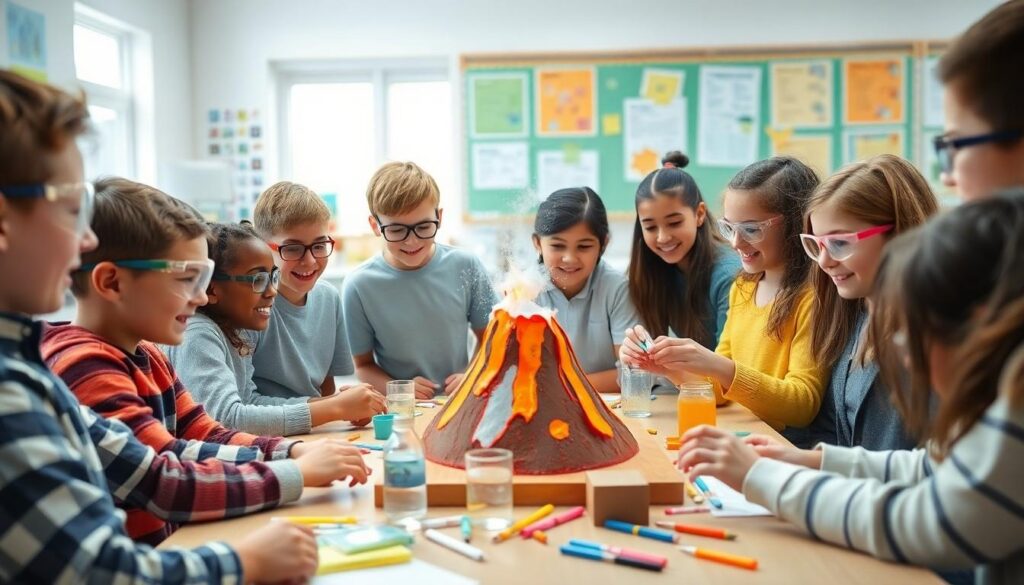
STEM projects can ignite a spark of curiosity and creativity, turning even the most reluctant learners into enthusiastic explorers. Whether it’s building a volcano that erupts or creating a robot that can dance, these hands-on activities make science, technology, engineering, and math come alive. Who knew learning could be this much fun?
Overview of STEM Project Ideas
STEM project ideas cover a broad spectrum of engaging activities that spark interest in science, technology, engineering, and math. Schools and educators can choose from a variety of projects, including simple experiments and complex engineering challenges. Many students enjoy projects that allow for creativity, such as designing a bridge with limited materials or creating a simple circuit.
Educators often find that hands-on activities enhance learning more effectively than traditional methods. Interactive projects, such as building a catapult or racing balloon-powered cars, encourage problem-solving skills. Students can also explore programming through projects like designing a video game or developing a simple website.
Collaborative experiences facilitate teamwork, fostering essential social skills. Projects involving teamwork, such as community gardening or robot building, teach
students the value of cooperation and communication. Some projects can be tailored to different grade levels, ensuring appropriate challenge and engagement.
Incorporating real-world applications boosts students’ interest. For example, using coding to develop an app that addresses local issues effectively combines technology and community awareness. Teachers can use current events or environmental concerns to inspire projects, reinforcing relevance and urgency.
Ultimately, STEM projects provide numerous opportunities for learners to explore and discover. By engaging students in practical applications of STEM concepts, educators inspire curiosity and a lifelong passion for these fields. Adopting diverse project ideas caters to varied interests and learning styles, ensuring an enriching educational experience for all students.
Benefits of STEM Projects

STEM projects offer significant advantages for students, enhancing vital skills and encouraging deeper learning.
Encouraging Critical Thinking
Students tackle challenges that promote critical thinking in STEM projects. Engaging in activities like designing experiments or solving engineering problems requires them to evaluate evidence and draw conclusions. Through this process, students analyze various outcomes, fostering the ability to think independently. Hands-on projects motivate them to hypothesize and test ideas while exploring cause-and-effect relationships. Practical examples, like creating a water filtration system, illustrate real-world applications, enhancing relevance. The trial-and-error approach in these activities teaches resilience, as students learn from mistakes. Consequently, the integration of critical thinking in STEM encourages paid attention to detail and logical reasoning.
Building Teamwork Skills
Collaboration plays a crucial role in STEM projects, helping students develop teamwork skills. Engaging in group tasks, like building robots or conducting experiments, requires clear communication and cooperation. Students practice sharing ideas, assigning roles, and resolving conflicts within their teams. Through these experiences, they learn to appreciate diverse perspectives and recognize the value of collective problem-solving. By completing projects that combine individual strengths, students experience shared successes. This not only boosts confidence but also reinforces the importance of contributing to a common goal. In STEM education, the collaborative approach aligns with real-world work environments, preparing students for future challenges.
Types of STEM Project Ideas
STEM projects come in various forms, catering to different interests and learning styles. Each type provides unique opportunities for exploration, creativity, and problem-solving.
Science-Based Projects
Science-based projects encourage hands-on experiments. Students can investigate chemical reactions through making homemade lava lamps or growing crystals. Biology-related projects, like building terrariums, help understand ecosystems. Engaging in physics, experiments such as launching model rockets allow exploration of motion and forces. Environmental studies can involve water filtration experiments, promoting awareness of sustainability.
Technology and Engineering Projects
Technology and engineering projects ignite creativity and innovation. Designing and programming robots can develop coding skills and problem-solving abilities. Building simple machines, like catapults or bridges, teaches principles of engineering. Creating mobile apps for real-world problems also combines technology with practical applications. Students can engage in 3D printing projects, exploring design and manufacturing processes.
Math-Related Projects
Math-related projects emphasize real-world applications of mathematical concepts. Creating graphs from data collected during experiments aids in understanding statistics. Students can build scale models, reinforcing geometry skills through hands-on experiences. Incorporating budgeting and planning in a mock business project teaches financial literacy. Puzzle-based challenges, such as logic games, enhance critical thinking skills while making mathematics enjoyable.
Tips for Successful STEM Projects
Successful STEM projects require careful planning and consideration. Thoughtful choices lead to engaging activities that inspire creativity and learning.
Choosing the Right Project
Select projects that align with student interests and educational goals. Consider the skill levels of participants, as suitable challenges enhance confidence. Explore a variety of themes, from environmental science projects to robotic engineering tasks. Incorporating real-world problems can significantly increase engagement. Assess available time and resources to ensure project feasibility. Prioritize projects that allow for flexibility and adaptability, as unforeseen challenges often arise.
Gathering Materials and Resources
Compile a comprehensive list of necessary materials before starting a project. Develop connections with local stores or online suppliers to acquire specific resources. Utilize common household items whenever possible, as they often make excellent project components. Leverage educational websites and databases to find additional resources and reference materials. Ensure safety guidelines are accessible and understood for all activities. Keep a backup plan for resources, as substitutions may be required during the project.
STEM projects offer an engaging and dynamic way to inspire students across various learning styles. By encouraging hands-on experimentation and collaborative problem-solving, these activities cultivate essential skills that prepare students for future challenges. The diverse range of project ideas ensures that every student can find something that piques their interest.
As educators and parents explore these opportunities, they’ll not only enhance students’ understanding of STEM concepts but also ignite a passion for lifelong learning. Embracing these projects can transform the educational experience into one that’s both enjoyable and impactful.